Project Jupiter: Community Forum (District 1) on Data Center Development - Briefing Document
9/5/2025
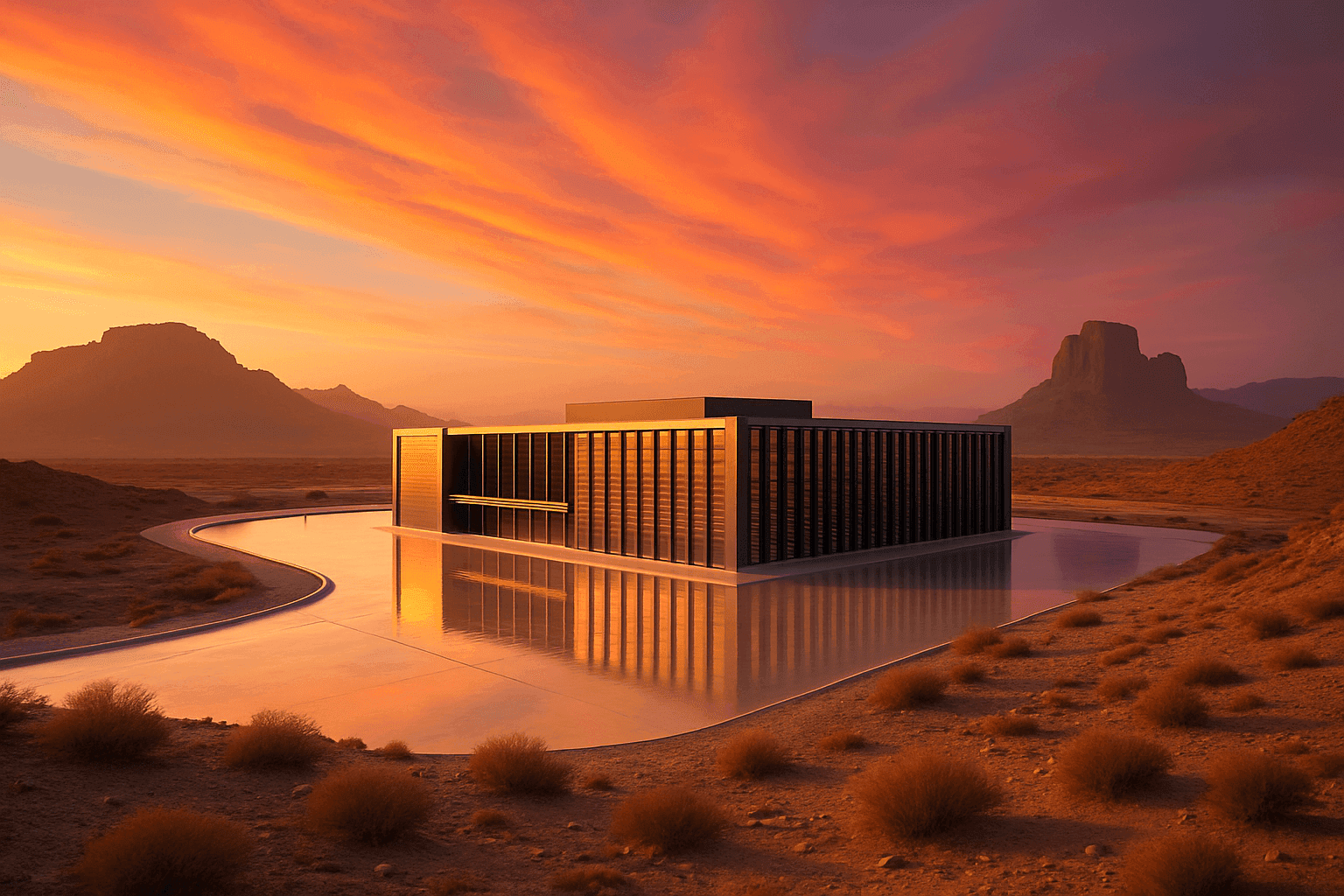
Project Jupiter: Community Forum (District 1) on Data Center Development - Briefing Document
📅 September 5th, 2024 | 🏛️ District 1 Community Forum | 💰 $165 Billion Investment
I. Executive Summary
This briefing document summarizes the key themes, ideas, and facts presented during the "Project Jupiter: Community Forum on Data Center Development" held on September 5th.
The forum aimed to inform the community about Project Jupiter, a proposed next-generation data center campus, and address concerns, primarily regarding water usage, economic impact, and environmental considerations.
Proponents emphasized the project's innovative, closed-loop water and microgrid power systems, the substantial economic investment of $165 billion, the creation of 2,500 construction jobs and 750 high-paying operational jobs, and significant contributions to county infrastructure and education.
Community members raised critical questions about water guarantees, the absence of a complete environmental impact study, the accountability of job creation for local residents, the tax implications of the Industrial Revenue Bond (IRB), and the transparency of the decision-making process.
The project is presented as a "once in a lifetime opportunity" for the region, currently in a competitive race with other states for the ultimate tenant.
II. Main Themes and Key Ideas/Facts
A. Project Overview and Scope
Project Jupiter: A proposed "next generation data center that's going to be one of very few belts around the country" and "unlike anything you've ever seen in the sense that the technology being employed and the resources to put it together are going to be very different from your typical data centers." It is described as a "campus" rather than just a single data center.
Investment: An estimated "$165 billion investment that's going to come into this region," primarily from "hyperscaler" companies (large tech firms) building the infrastructure.
Location Rationale: The region is attractive due to "fiber connectivity and having energy around," specifically abundant solar potential and existing fiber infrastructure. The proximity to Foxconn on the Mexican border also offers "synergies coming up through the border with these able to deliver computing parts."
Current Status: The project is in a competitive phase, with New Mexico vying against other states for the ultimate technology company tenant. A decision is anticipated around September 19th. The county has been under a non-disclosure agreement for some details, with discussions becoming public more recently as a tenant became seriously interested.
Project Developers/Stakeholders:
| Name | Role | Organization |
|---|---|---|
| Miguel Hernandez | Fourth-generation Paso del Norte region resident, Internet company founder, board member and investor | Borderplex |
| Kevin Greer | Director of Wet Utilities | Stack Infrastructure |
| Jennifer Bradfield | Consultant | Borderplex Digital |
| Nick Miner | Director of Public Affairs | Stack Infrastructure |
| Stephen Lopez | Assistant County Manager | Doña County |
| Borderplex Digital Assets & Stack Infrastructure | The primary entities driving the project | - |
B. Water Usage and Conservation
Closed-Loop System: Project Jupiter is designed with a "full water usage through minimum," utilizing a "closed loop system" that recaptures and repurposes water, making it "unlike traditional data centers that use evaporative water." Once filled, the system will not take additional water from aquifers.
Minimal Ongoing Water Needs: "Ongoing water use is limited to the domestic needs of employees like the use of bathroom and sinks," similar to "an office building with around 750 employees."
Water Usage Estimates:
| Type | Amount | Notes |
|---|---|---|
| Average Usage | 20,000 gallons per day | Ongoing operations |
| Peak Usage | 60,000 gallons per day | High-demand periods |
| Initial Fill | TBD | Still being engineered |
Initial Fill Options: The amount for the initial fill of the system is still being engineered, but there were mentions of potentially "trucking water her in from other states" or using "reclaimed water from wastewater plant" or "brackish water." An earlier, unofficial document reportedly requested "5 million gallons" from CREWA for the initial fill, which CREWA apparently rejected.
Comparison to Agriculture: Annual water usage is estimated to be the "equivalent of five to eight acres of peons" or "8 to 18 acres of chilies."
Investment in Infrastructure: The project will "invest tens of millions of additional dollars in county drinking water and wastewater infrastructure improvements to ensure long term water security and sustainability for the region."
Brackish Water Desalination: There's interest in exploring brackish water sources from deep aquifers, with potential partnership with EPCOR (a New Mexico-based company with an Albuquerque office, despite a Wikipedia entry linking to a Canadian utility) for desalination technology. This involves drilling test wells and studying aquifer recharge rates, as "deep water is related to the shallow water."
Water Accountability: The county, which will take over water utilities from CREWA (expected to dissolve by mid-next year), will have "direct control over it and visibility on every customer," with the authority to "shut off the water" if usage exceeds agreed-upon limits. Switching from a closed-loop system to evaporative cooling is "basically impossible" once built, as buildings are designed specifically for the closed-loop system.
C. Power Generation and Consumption
Microgrid System: The data center will utilize a "private microgrid system" for its power needs, meaning it will "not use El Paso electrics electricity." This aims to prevent "impact on this community from higher rates" and avoid "asking for a special rate from El Paso Electric."
Zero Carbon Goals: New Mexico law requires the microgrid to be powered by "zero carbon resources by the year 2045."
Power Portfolio: The initial phase will include natural gas, as "99.9% reliability of the power delivery" is needed, and "100% renewables as we start" with current technology would lead to "intermittent power." The project plans to have the "world's largest battery storage project at this site" to complement renewables.
HB93 Exemption: Concerns were raised about HB93, which exempts microgrids selling power from being considered retail sales and potentially from following carbon-neutral steps. The project clarified it will be "self-contained" and "all created here."
Environmental Impact Study: A complete environmental impact statement, particularly concerning the power generation (including gas turbines), is a requirement in the IRB application but has not yet been provided. This raised significant community concern, with the county stating it comes "as part of the permitting process" once a commitment to the region is secured.
D. Economic Impact and Job Creation
Job Numbers:
| Phase | Jobs | Duration | Annual Revenue |
|---|---|---|---|
| Construction | 2,500 | 2.5 years | - |
| Operations | 750 | Permanent | $55 million |
High-Paying Jobs: Operational jobs are estimated to pay "on average about 75,000 to $100,000 a year, plus benefits." This is highlighted as a significant opportunity to improve "the quality of life of people around here" in a region where income per capita trails the national median.
Workforce Development: A commitment to partner with local universities (NMSU), community colleges, and high schools (Gadsden Independent School District) to "train people up so they can take advantage of what's going to happen next" and build a "tech talent pipeline." Skills needed include "light engineering degree," "mechatronics," "network engineering," "telecommunication background," and knowledge of "H vac and electrical."
Local Hiring: While there's no legal mandate, the project and county "insisting that they incentivize New Mexican Resort" and prioritizing hiring Doña County residents. The county will monitor job metrics via the Local Economic Development Act (LEDA) and can claw back tax rebates if commitments are not met.
Community Contribution: "Paying into the county $300 million over time so we can build up schools, we can build up community centers, we can build up infrastructure."
Vendor Opportunities: Local businesses can sign up on the Project Jupiter website to "participate" as vendors.
Spaceport Comparison: The project differentiates itself from the Spaceport (funded by a voter-approved gross receipts tax), stating that the IRB is "not paid for by the taxpayers at all. This is paid for by the company."
E. Industrial Revenue Bond (IRB)
Mechanism: The IRB is a "common tool used by at least 30 states" to encourage businesses. The company "deed the property over to the county and then pay for that." The funding comes from a "privately issued bond that's funded by the project builder," not county-issued bonds.
Tax Benefits: The IRB provides tax benefits, which raised questions about "how much GRT [gross receipts tax] is Doneana county gonna miss out on." Proponents argue that without the IRB, the project might not come to New Mexico, so there wouldn't be GRT to collect. The exact GRT loss over 30 years "has not been calculated" due to lack of approved plans and difficulty in assessing future value.
New Mexico's Deal: It's asserted that Project Jupiter's proposed "pilot payments" (payments in lieu of taxes) are "pretty substantial" and New Mexico is "getting a slightly better deal" compared to other states.
F. Community Concerns and Transparency
Water Depletion: Significant concern about depleting the aquifer, especially for citizens of Sunland Park and local farmers.
Environmental Impact Study: The absence of a completed Environmental Impact Study/Statement despite being a requirement in the IRB application was a major point of contention.
Job Accountability: Skepticism about the guarantee of 750 jobs, especially for New Mexico residents, given the potential for remote work in hyperscale data centers.
Tax Loss: Frustration that the potential gross receipts tax loss over 30 years due to the IRB was not calculated or disclosed.
Transparency and Timing: Questions were raised about why the community was only hearing about the project at the "11th hour" before a crucial decision, suggesting a lack of sufficient time for public engagement. The information provided was perceived by some as a "lobbying document" rather than neutral.
Safety Measures: Concerns about fire safety, especially given the lack of a dedicated fire department in Santa Teresa, though it was clarified there is a fully staffed station at the jetport and the project will use a standard sprinklered system. Stack also commits to partnering with local fire departments for training.
Decommissioning: Questions about financial guarantees for cleaning up the site if the project walks away, comparing it to other "eyesores" from abandoned projects. The response emphasized the repurposed value of the infrastructure.
Economic Benefit Capture: Worry that "Texas is going to capture the most of the economic benefit, but New Mexico is subsidizing it."
G. Proponent Responses and Commitments
Open Dialogue: Proponents aimed for "civil discourse" and set up breakout tables for detailed discussions on water, power, community impact, IRBs, and jobs.
Commitment to Water Conservation: Repeated assurances of the closed-loop system, minimal ongoing use, and investment in county water infrastructure.
Local Hiring Focus: Strong emphasis on training local workforce and prioritizing New Mexico residents, even without a legal mandate.
Accountability: The county highlighted LEDA requirements for meeting job metrics and the ability to claw back tax rebates.
Future Communication: Plans to publish "four videos" and infographics to "simplify a lot of these themes" and improve public outreach.
III. Outstanding Questions and Areas for Further Discussion
1. Exact Water Numbers for Initial Fill
While the ongoing usage (20k-60k GPD) is clear, the specific volume and source for the "one-time fill" of the closed-loop system are still being engineered. More concrete plans for trucking, reclaimed, or brackish water, and associated permits, are needed.
2. Complete Environmental Impact Study
The timeline for the completion and public availability of the full environmental impact statement, especially for the power plant, remains an critical unresolved issue.
3. GRT Loss Calculation
Despite the competitive nature of IRBs, the community expressed a strong desire for an economic assessment of the foregone gross receipts tax over the project's lifespan.
4. Legal Guarantees for Local Jobs
While commitments were made, the community sought stronger "teeth" to ensure the 750 jobs genuinely benefit New Mexico residents.
5. Long-Term Aquifer Impact
More detailed research on deep aquifer recharge rates and the potential connection between brackish and shallower freshwater aquifers is crucial, as mentioned in the Bureau of Geological and Mineral Resource report.
6. Microgrid Power Mix and Evolution
While the initial reliance on natural gas is explained, a more detailed roadmap for transitioning to 100% zero-carbon resources by 2045 would address concerns.
7. Decommissioning Plan and Financial Assurance
Clearer information on the project's long-term decommissioning plan and any financial guarantees or bonds to cover environmental remediation or site cleanup in case of project abandonment.
8. IRB Negotiation Details
Greater transparency regarding the "comps" used to determine New Mexico's "better deal" on pilot payments would help build trust.
9. Public Engagement Timeline
Future large-scale projects should consider more extended and proactive public engagement timelines to allow for thorough community review and input.
This briefing document summarizes key information from the September 5th community forum, presenting the content in an accessible, scannable format.
This article contains AI-generated content. Please review our AI Disclaimer for important information about the accuracy and limitations of this content.